
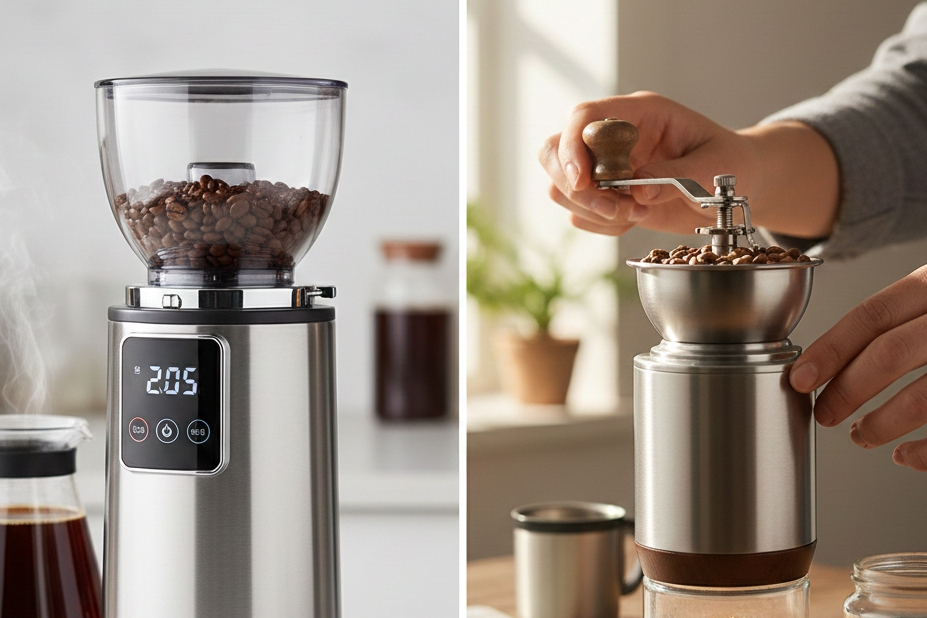
For any coffee enthusiast, the debate between electric and manual coffee grinders is a rite of passage. While both serve the same ultimate goal—turning beans into grounds—the experience and results vary significantly.
Here is a breakdown of the pros and cons to help you decide which one deserves a spot on your kitchen counter.
Electric Coffee Grinders: Speed and Consistency
Electric grinders are the go-to for convenience. Whether it’s a blade grinder or a high-end burr mill, these machines do the heavy lifting for you.
Pros:
-
Effortless & Fast: Grinds enough coffee for a full pot in seconds at the touch of a button.
-
Precision: High-quality electric burr grinders offer a wide range of settings, from ultra-fine espresso to coarse French press.
-
High Volume: Ideal for families or hosting guests where you need to brew multiple cups quickly.
Cons:
-
Price: Quality electric burr grinders are a significant investment.
-
Noise: They can be quite loud, which might not be ideal for early risers in a quiet house.
-
Size: They take up more counter space and require a power outlet.
Manual Coffee Grinders: Portability and Ritual
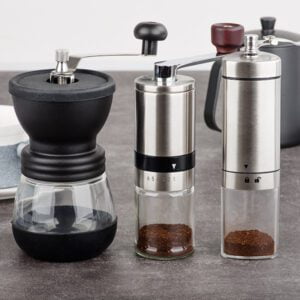
Often called “hand grinders,” these tools are favored by purists who enjoy the tactile process of brewing.
Pros:
-
Portability: Compact and lightweight, making them perfect for camping or traveling.
-
Quiet Operation: No motor means you can grind beans without waking up the entire household.
-
Value for Money: You can get a professional-grade stainless steel burr in a manual grinder for a fraction of the cost of an equivalent electric model.
Cons:
-
Physical Effort: Grinding for a dark roast is easy, but light roasts or fine espresso settings can be a workout.
-
Time-Consuming: It typically takes 30–60 seconds to grind a single serving.
